
Showing posts with label self help. Show all posts
Showing posts with label self help. Show all posts
Monday, 6 July 2020

Friday, 3 July 2020
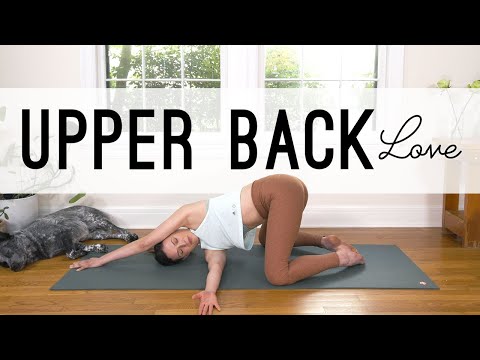
Hatha Yoga for Beginners: Discover Peace of Mind

Each of the following fours subjects we discuss can cause us damage to our mental and physical state of health. Let's determine what we can do and if they are real. In each case, Yoga can give you inner strength to deal with these troubles.
Fear can be real, but most often is self-created because it is fear of what we do not know or understand. Take a close look at what your fear is. Is it something you can take action to prevent? Can you develop a "damage control" plan?
This type of thinking is not Yoga meditation. It is self-analysis that gives you the power to determine real from imaginary. In Jnana Yoga, you learn through reading, facing the truth, and putting the principles into action.
One last point about fear: If it is real, you have to take action, and this may be a major move in life; however, if you or your family's survival is at stake, worrying will not solve fear. You have no choice, other than taking positive action.
Self-pity can cause us pain, sorrow, and grief. We feel self-pity from loss, but we must pick ourselves up and move on. Yoga practice, Yoga classes, and Yoga meditation can help us bear this pain, but positive habits, and time, heal us, as well.
Yogic philosophy teaches us to do something for someone who is less fortunate. Even when our own situation looks dismal, it will not be hard to find a person who needs our help. When you help others, this is a form of Karma Yoga, and you will feel better about yourself.
Insecurity is a result of lack of faith. Yoga can help you find faith again. Everyone who practices Yoga long enough understands the Yogic aspect of spiritual health. You do not have to be any particular religion to find your spiritual side. Yoga is universal, non-threatening, and does not discriminate.
Past failures drain us of life energy, if we do not put them behind us and learn from them. Yoga teaches us to live in this moment. The present determines the future, and the past is history. You can learn from history, but you cannot change it.
Sometimes, past failures create a state of mind, where we cannot forgive ourselves or others for mistakes and wrong doings. Who do we punish by withholding forgiveness? We create a "prison" for ourselves, when we do not forgive. Yoga teaches us self-empowerment, not self-imprisonment.
Lastly, if you want peace of mind, you must take action, find solutions, or visit your local Yoga class. Peace of mind is a choice for most of us. If you have the power to visit a Yoga class, you have the power to gain peace of mind.
© Copyright 2006 - Paul Jerard / Aura Publications
Paul Jerard, E-RYT 500, is a co-owner and the director of Yoga teacher training at: Aura Wellness Center, in Attleboro, MA. http://www.riyoga.com He has been a certified Master Yoga teacher since 1995. To receive a Free e-Book: "Yoga in Practice," and a Free Yoga Newsletter, please visit: http://www.yoga-teacher-training.org/index.html
Article Source: https://EzineArticles.com/expert/Paul_Jerard/9999
https://ezinearticles.com/?Hatha-Yoga-for-Beginners:-Discover-Peace-of-Mind&id=357321Article Source: http://EzineArticles.com/357321
Monday, 22 June 2020
Self Help For Success In Life - It's In Your Positive Mental Attitude And Beliefs

Over time, "I'm not smart enough" became my belief about myself and my ability for success. For twenty years, I wouldn't take on certain challenges. I "knew" I'd never be a professional speaker or write a book or articles. I "knew" I wasn't smart enough for things like that, so why even try? My lack of success and limited potential seemed to be completely dictated by ONE moment when I was nine years old.
Not so. Years later, I learned a powerful self help principle for success - Reality does not hold back. Our perception of reality holds us back. I learned that "being tutored" was simply what happened, but I perceived it to mean - "I must not be smart enough". The reality of being tutored hadn't held me back; my perception of "being tutored" had held me back.
Everyone has belief barriers in one form or another, which were developed as a result of having an experience, making it mean something, formulating a negative attitude, and reinforcing that attitude over and over and over until it became a self-limiting belief.
Here are some examples of self-limiting attitudes and beliefs that can hold us back from success in some areas of life:
I'm not smart enough. I'm not good enough. I don't have the right background. I'm not lovable. I just don't have the time. I'm too shy. I'm too tall....too small.. Things never work out. I'm just not cut out for that. I'm too old. I'm too young. I hate myself. I've never been any good at that. I'm not worthy. I never catch a break. I'm too stubborn. I don't have enough patience.
What belief barriers hold you back from success? As you consider your limiting beliefs and your past experiences that gave rise to them, imagine that a couple of doctors performed surgery on you.
From head to toe, they removed every bone and piece of soft tissue from your body and analyzed it closely under a microscope.
Here's the ten million dollar question - Is there anywhere in your miraculous body that those surgeons would physically find an organ called, "I'm not good enough"? Is there anywhere the surgeons would find a bone or some other anatomy called "I'm not smart enough" or "I don't have the right background"?
Of course not! No such thing exists in your body like your collarbone exists. Such limitations are not tangible. Limiting beliefs only exist in your language; your attitude; what you say about yourself.
Relative to "being tutored", was it possible for me to say something more positive to myself? What if I had said or adopted the positive attitude, "I'm spending extra time filling up that big, smart brain of mine?" Had that been my self help attitude about being tutored, my success in many areas would have come much more quickly.
Once I understood that my belief about being stupid, ONLY existed in my language because of what I'd been telling myself over and over for years and years, I instantly became smart enough to start a business, begin the journey to being a speaker and writer! I didn't become "smart enough" by going back to school and making good grades. It instantly happened when the "I'm not smart enough" lie I'd been telling myself was exposed.
Never forget your ability to call into question the disempowering attitudes that you have believed about yourself. That's a powerful form of self help because in doing that, you expose the lies and instantly see new possibilities for yourself and your capabilities. From there, you can have instant progress and success where there has been none before.
What lies have you been telling yourself, about your own capabilities, that don't enable you to reach your next level of success?
Copyright 2007
This article content is from Bill Dyer's Award-Winning Book, When Life Blows You Down. To receive FREE tips on "257 Ways To Appreciate This Moment And Create A Life You Love", go to: [http://www.appreciatethismoment.com]
Bill Dyer
Professional Speaker/Award-Winning Author
336-379-0777
Article Source: https://EzineArticles.com/expert/Bill_Dyer/114239
https://ezinearticles.com/?Self-Help-For-Success-In-Life---Its-In-Your-Positive-Mental-Attitude-And-Beliefs&id=678387Article Source: http://EzineArticles.com/678387
Friday, 29 May 2020
New Book Reveals Ways to Unbecome What Hinders Our Happiness
In Unbecoming, Karen Emenheiser's down-to-earth, honest, and bold perspective on life sheds light on how we all have our faults and flaws, but through God's grace, we are also all worthy. Like all of us, Karen has struggled with feelings of doubt and shame, but over time, she has become "determined to be unapologetically me while I walk closely with God toward becoming the best version of me."
 Karen did not set out to write a Christian book, and that's not really what Unbecoming is, but it's important to understand the basis behind it. One night after Karen lost her temper and cried to God in frustration, a realization hit her like a bolt of lightning right in her heart. Then a voice popped into her brain that said, "My Grace is sufficient for thee." She realized then, "It was God's mercy and love letting me off the hook. Not a 'try harder,' not a 'hang in there; you'll get it.' But a genuine, 'You are off the hook.'"
Once Karen had this realization, life became a little easier for her. She learned how to focus on behaviors to keep her triggers from being united-triggers that come from past traumatic experiences. She came to understand that the difficult people in her life weren't really assholes but just anxious people who lose it when they are triggered. Understanding that, she developed compassion.
And there's a lot of compassion in Unbecoming for everyone. Karen walks the journey with us, exposing all her faults and fears and telling us how she deals with the difficulties in her life, giving us tools to deal with them in our own lives. She knows these tools work because she's seen them help others. As a therapist who helps people in the Military, especially families who have had a loved one who has been deployed and separated from the family long-term, she's seen how these practices have helped her clients succeed in healing or strengthening their relationships.
That doesn't mean that unbecoming is easy. Even though Karen has counseled a lot of married couples, she's also had her own marriage struggles. She reveals that she once told her husband she hated him. She talks about how hard it was to have spent the months before they married proving to him she was perfect, only to have him realize after they were married that she had flaws and she then had to deal with his criticisms. Plus, she and her husband have very different personalities. She is fun-loving and outgoing, while he is far more reserved. It took a long time for both of them to quit trying to change or control the other and just accept each other for who they are.
One of the biggest problems we create for ourselves is trying to pretend to be someone we aren't to other people. I love Karen's advice on this topic: "Stop trying to keep up an image as if your worth rested on it. Jesus tells a man in the Bible that if he wants to be perfect, he must sell all his stuff, give the money to the poor, and follow Him (Matthew 19:21). He doesn't say to accumulate more, know more, be more, or do more. In fact, just the opposite... get your worth down to nothing and stop aspiring to being something great. Perfection is a product of having and wanting nothing. Unbecoming rather than becoming."
One of the biggest problems we all face in unbecoming is an inability to live in the moment. We are usually bemoaning something from our past or anxious about something in the future. I love how Karen makes her clients realize this by asking them, "Do you have a problem right now, as in, in this moment?" At first, her clients don't get it, but eventually, they respond, "No, I don't have a problem in this particular moment, at this time, in this room." Karen then encourages them to routinely ask themselves that question when they feel anxious or angry. Almost always the answer to it will be no. Having tried this myself for a few days, I am amazed by the remarkable calming feeling it gives me.
Perhaps the hardest part of unbecoming is coping with the trauma from our past. It can make us into angry, scared, or difficult people. To be happier, we must heal from that pain. To help us heal, Karen shares tips on anger management and how to avoid being passive-aggressive. She shares how to influence people rather than try to control them. She asks us to put our problems into perspective since many of our problems are First World problems and hardly life or death matters. And best of all, she talks about how we need to take risks to heal our past. Here she shares the incredible story of how she nearly refused an invitation to meet with her childhood bully and how that meeting helped her heal and change her perspective.
There is much more in Unbecoming to reflect and chew on, but ultimately, it's a call for learning to accept and love others unconditionally. Toward the end of the book, Karen says, "The tough-lovers of the world have little grace for messy people. What if we could love someone with all the support and dignity they deserve and the grace and mercy that's been given to us... ? We need more 'you do you'-today's expression of grace and mercy."
I hope in Unbecoming, you will discover the grace and mercy awaiting you. Then pass it on.
Article Source: https://EzineArticles.com/expert/Tyler_Tichelaar/143913
https://ezinearticles.com/?New-Book-Reveals-Ways-to-Unbecome-What-Hinders-Our-Happiness&id=10270501Article Source: http://EzineArticles.com/10270501
Thursday, 28 May 2020
Tips for Better Self Care
Tips For Better Self-Care
It can be difficult to make time for self-care in our busy schedules. We run from one commitment to another, filling every gap in our life with work, study, family and social events. The chaos of modern life makes it even more important that we take the time to care for our individual wellbeing, both physically and mentally.
If you are struggling with your own self-care, consider these five tips to improve your habits.
 1. Add self-care to your normal routine
When planning your weekly schedule, make sure that you have time for self-care. Cementing its place in your routine means that you will be more likely to commit to self-care as you will have allocated time specifically reserved for it. The more often you practice self-care, the more it will become a habit and part of your regular life.
2. Do what suits you
Self-care looks for different for everyone. Some people enjoy getting outdoors, others like catching up with friends and some people prefer sitting at home losing themselves in a good book or movie. Identify what makes you feel better and commit to that. Donít feel pressured by what others consider self-care; long walks arenít for everyone.
Self-care looks for different for everyone. Some people enjoy getting outdoors, others like catching up with friends and some people prefer sitting at home losing themselves in a good book or movie. Identify what makes you feel better and commit to that. Donít feel pressured by what others consider self-care; long walks arenít for everyone.
3. Practice gratitude
Engaging in regular gratitude practice is a valuable habit and a worthwhile way to spend your allocated self-care time. Take some time each day or week to write down three things that you are grateful for. Try to think of unique things that have happened for that week, rather than repeating the same common things each time. It may be difficult at first, but the more you practice gratitude the easier it will become. Regular participation in gratitude exercises trains your brain to be more thankful and positive about the things you have in your life, rather than focusing on the things you donít have or things that arenít going so well.
Engaging in regular gratitude practice is a valuable habit and a worthwhile way to spend your allocated self-care time. Take some time each day or week to write down three things that you are grateful for. Try to think of unique things that have happened for that week, rather than repeating the same common things each time. It may be difficult at first, but the more you practice gratitude the easier it will become. Regular participation in gratitude exercises trains your brain to be more thankful and positive about the things you have in your life, rather than focusing on the things you donít have or things that arenít going so well.
4. Be brave and try something new
Trying something new is a great way to break the monotony of everyday life. Your mental health will benefit and you will learn new skills, both through the actual activity but also in regard to managing your nerves and being open to new opportunities. Itís a great way to take care of your mental, and depending on the activity, physical health.
Trying something new is a great way to break the monotony of everyday life. Your mental health will benefit and you will learn new skills, both through the actual activity but also in regard to managing your nerves and being open to new opportunities. Itís a great way to take care of your mental, and depending on the activity, physical health.
It's time for you to make you a priority.
My business card bit.ly/BVAUGHNbusinesscard
Entrepreneur Starter Fast Track bit.ly/ESFTInvest
Article Source: https://EzineArticles.com/expert/Beverley_Vaughn/2479875
https://ezinearticles.com/?Tips-for-Better-Self-Care&id=10259693Article Source: http://EzineArticles.com/10259693
Subscribe to:
Posts (Atom)
-
 The only way to have a friend is to be one."... Emerson Who are your friends? What do they mean to you? No matter where you go,...
 -
 You will discover foods which will actually enable you to discover how to boost metabolism to lose weight -- in other words, they can accele...